
Over-Improving: The Remodeling Mistake Nobody Warns About
You'd expect a remodeling contractor to always vote for the bigger project. But some of the most useful conversations we have run the other direction: talking a homeowner down from a scope that's about to sail past what their house, their block, or their actual life can justify.
Under-improving gets all the warnings — the cheap flip, the corner-cut bathroom. Over-improving is quieter. It looks like success. The finishes are gorgeous, the appliances are professional-grade, and the money is simply never coming back. Here's how it happens and how to avoid it.
What over-improving actually looks like
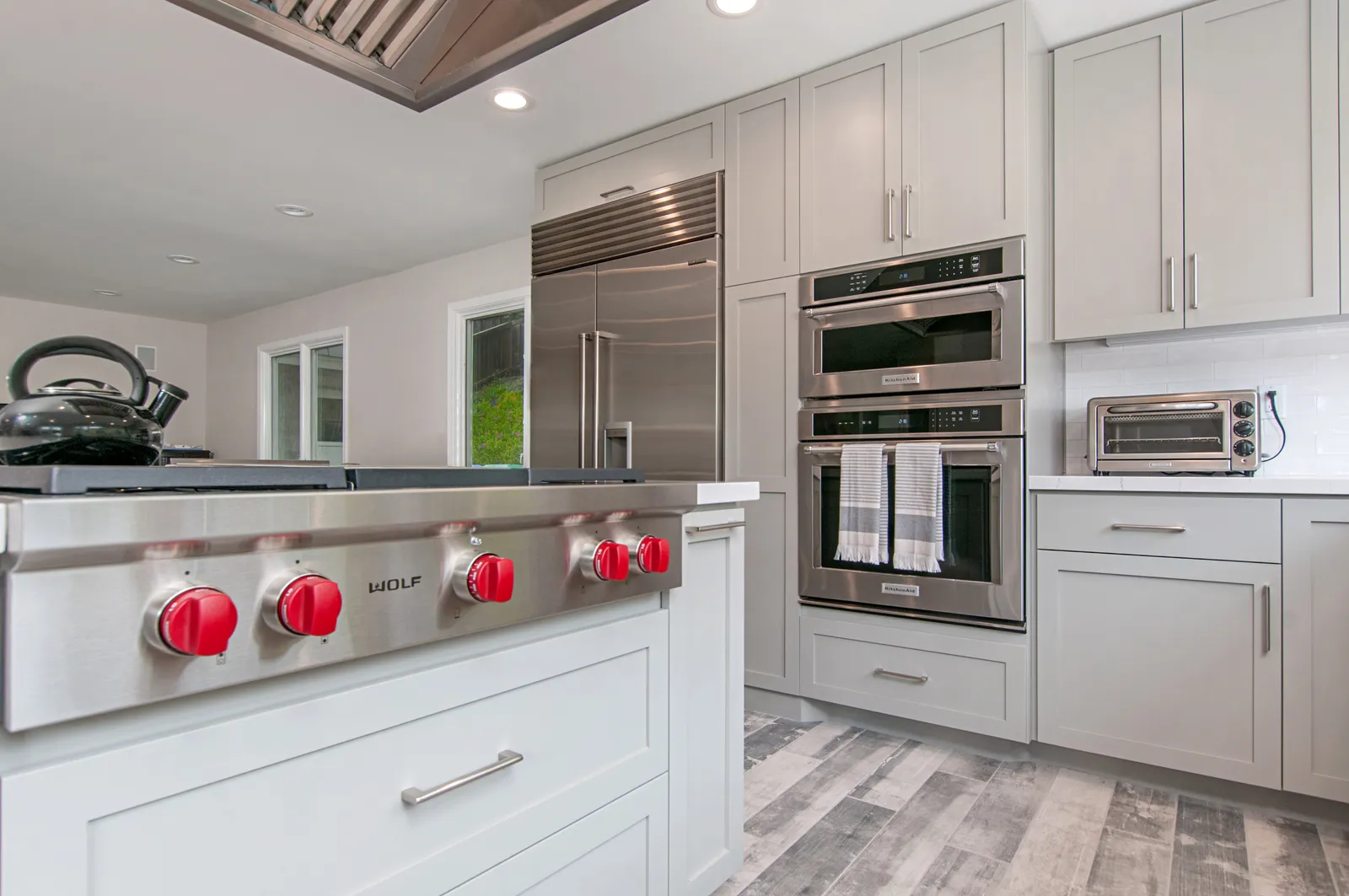
It's rarely one big decision. It's a hundred small upgrades, each defensible on its own: the commercial-style range for a household that cooks twice a week, the imported tile where a beautiful domestic line would read identically, the third pattern-matched slab because the bookmatch "wasn't quite right." Each choice adds a little; together they can push a project a full tier above the house that surrounds it.
The test isn't whether an upgrade is nice. It's whether the house as a whole — location, size, lot, neighborhood — can carry it. A showpiece kitchen in a modest home doesn't make the home a showpiece; it makes the kitchen an orphan.
The neighborhood ceiling is real
Every San Diego street has an effective ceiling — the value the best house on that block can command — and remodeling dollars spent above it mostly evaporate. This is the single most useful reality check in project planning, and it's why we encourage clients to look at their block honestly before setting a budget. We walked through the mechanics in how neighborhood comps should shape your remodel budget, and the principle holds from Bay Park to Rancho Santa Fe; only the ceiling height changes.
The forever-home exception
Now the honest caveat: resale math isn't the only math. If you're planning to stay fifteen or twenty years — and with rates where they are this year, a lot of families are digging in rather than moving — then some "over-improvements" are really just paying for your own daily life, and that's a legitimate choice. The steam shower you use every morning doesn't need a spreadsheet to defend it.
The key word is choice. Over-improving is only a mistake when it's accidental — when nobody told you the block couldn't support the budget, and you found out at appraisal time. Spending past the comps with clear eyes, for a home you intend to grow old in, is something else entirely.
How to right-size a project
Three habits keep scope honest. First, set the budget from the house and neighborhood outward, not from a wish list inward. Second, rank the scope: structural and systems first, layout second, finishes third — finishes are the easiest place to flex without touching what matters. Third, pressure-test the line items; there's almost always a way to keep the effect and trim the cost, which is the whole discipline we described in value engineering.
This is also where design-build earns its keep: because design and construction budgets live under one roof in our process, you find out what things cost while the plan can still change — not after you've fallen in love with it.
Trying to figure out how much remodel your house can honestly carry? Tell us what you're planning or give us a call — we'll give you the straight answer before you spend a dollar on the wrong scope.
Design · Build · Integration
Let's build something beautiful.
Call (619) 334-3322 or request your free design-build consultation.