
Kitchen Lighting Layers: Task, Ambient, and Accent
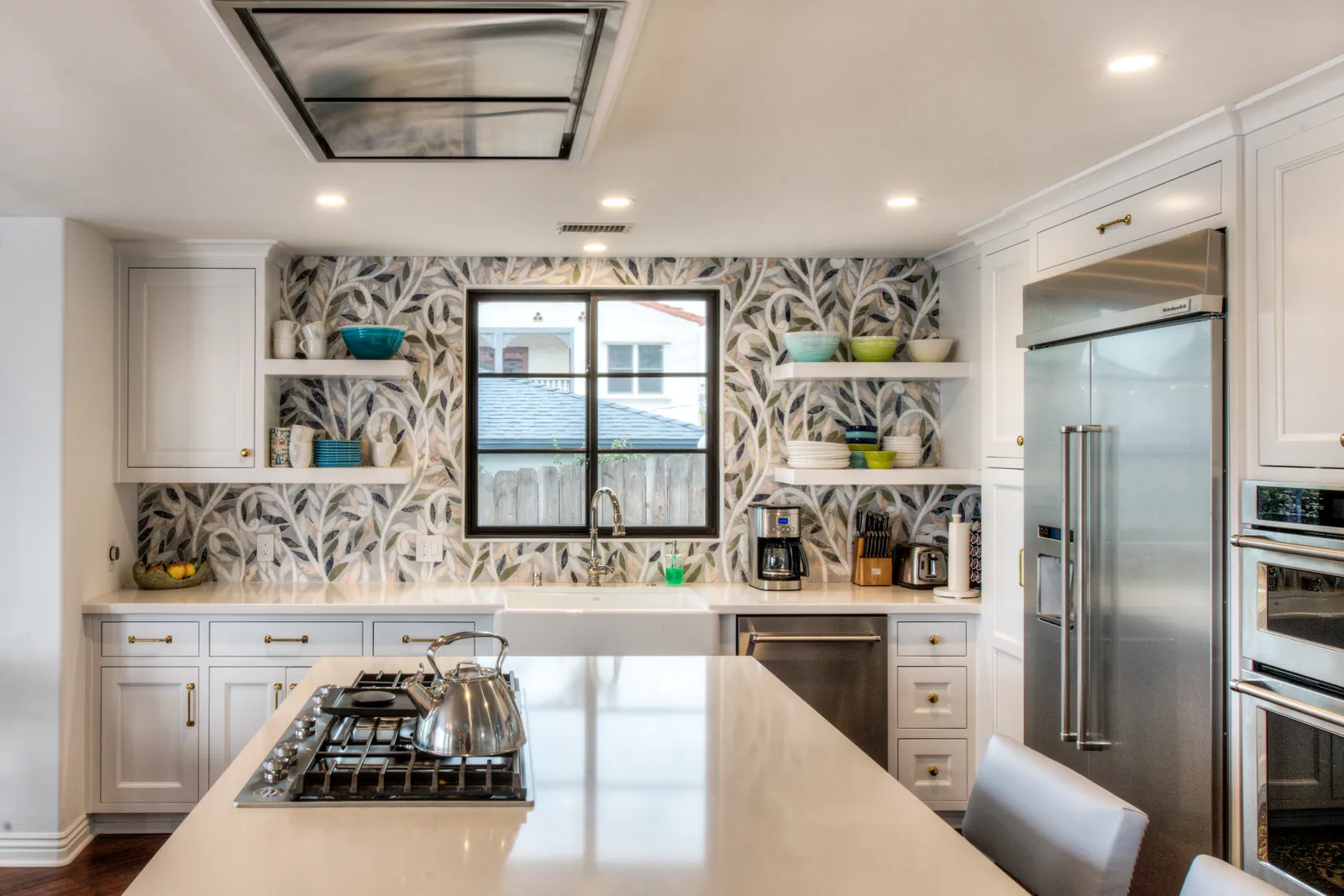
It's dark by five o'clock now, which means San Diego kitchens are getting their annual honesty check. A kitchen that felt bright all summer — sunshine pouring in, dinner at seven with the doors open — suddenly reveals what its light fixtures actually do on their own. For a lot of homes, the answer is: not much. One ceiling fixture in the middle of the room, or a grid of recessed cans installed wherever the framing allowed, casting your own shadow across every cutting board.
Good kitchen lighting isn't about more fixtures, and it isn't about brighter bulbs. It's about three distinct layers doing three distinct jobs — and the difference between a kitchen that merely functions and one that feels wonderful at 6 AM and 9 PM alike is almost always the layering, not the fixture budget.
Task lighting: light where the knife work happens
Start where your hands are. Under-cabinet lighting is the single highest-value fixture in a kitchen because it puts light directly on the counter with nothing — including you — standing between the source and the work. Add a dedicated fixture over the sink and real, focused light over the island, and the three points of your kitchen work triangle are covered. The most common mistake we correct: ceiling cans placed in the middle of the room instead of above the counter edge, which guarantees you'll work in your own shadow.
Ambient lighting: the light the room lives in
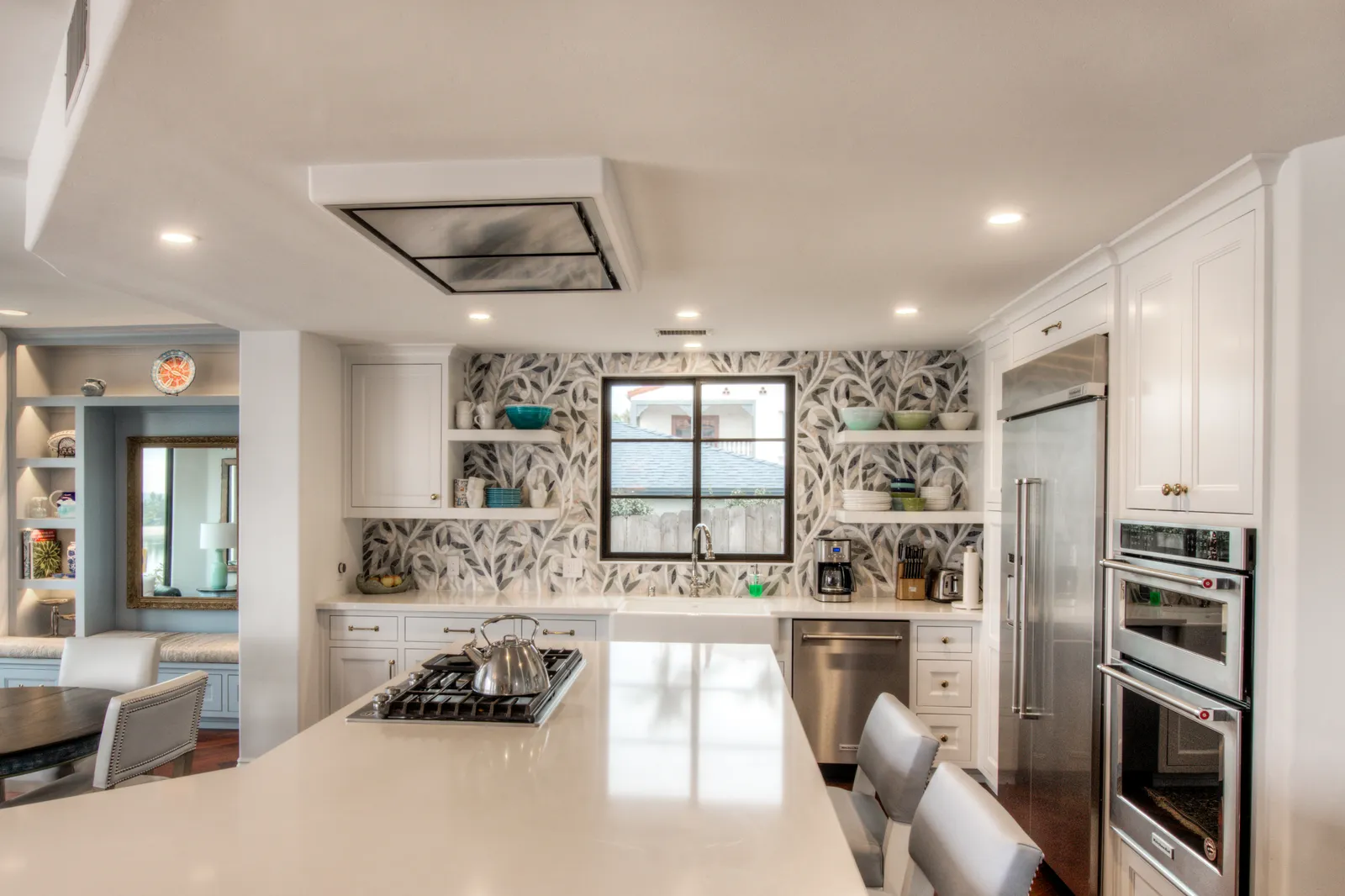
Ambient light is the overall glow — recessed cans, a flush ceiling fixture, sometimes a cove that washes the ceiling. Two rules make it work. First, position recessed lights about two feet off the wall so they graze the cabinet faces rather than hover over open floor. Second, keep color temperature consistent: mixing a warm bulb here and a cool one there makes even a beautiful kitchen feel off in a way guests sense but can't name. In a region where the marine layer can keep mornings gray until noon, warm, even ambient light earns its keep far beyond the winter months.
Accent lighting: the layer that makes it yours
Accent light is where a kitchen goes from functional to finished. Interior lights in glass-front cabinets. A soft wash over a tile backsplash you agonized over. Toe-kick lighting that turns a midnight glass of water into something civilized. Pendants pull double duty here — they're task lighting over the island, but their glow and their shape are pure accent. This layer also flatters your materials: the same polished counters we compared in our countertop guide look entirely different under a warm accent wash than under flat overhead light.
Put it on layers, not one switch
The plan only works if you can control each layer independently. That means separate switching for task, ambient, and accent, and dimmers on nearly everything. Weeknight cooking wants full task light; a dinner party wants the counters dimmed and the accents up; the morning coffee run wants toe-kicks only. One switch that turns everything on at once flattens all three layers back into the single ceiling fixture you were trying to escape. Getting there is a wiring exercise, which is why lighting is a design decision made early in a kitchen remodel — while walls are open — not a fixture-shopping trip at the end.
If your kitchen is failing its winter audition, this is a fixable problem — and one worth fixing right rather than bulb by bulb. Request a consultation or give us a call — we'll design a kitchen that looks its best at every hour, in every season.
Design · Build · Integration
Let's build something beautiful.
Call (619) 334-3322 or request your free design-build consultation.