
Grout Color: The Cheapest Design Decision You'll Sweat
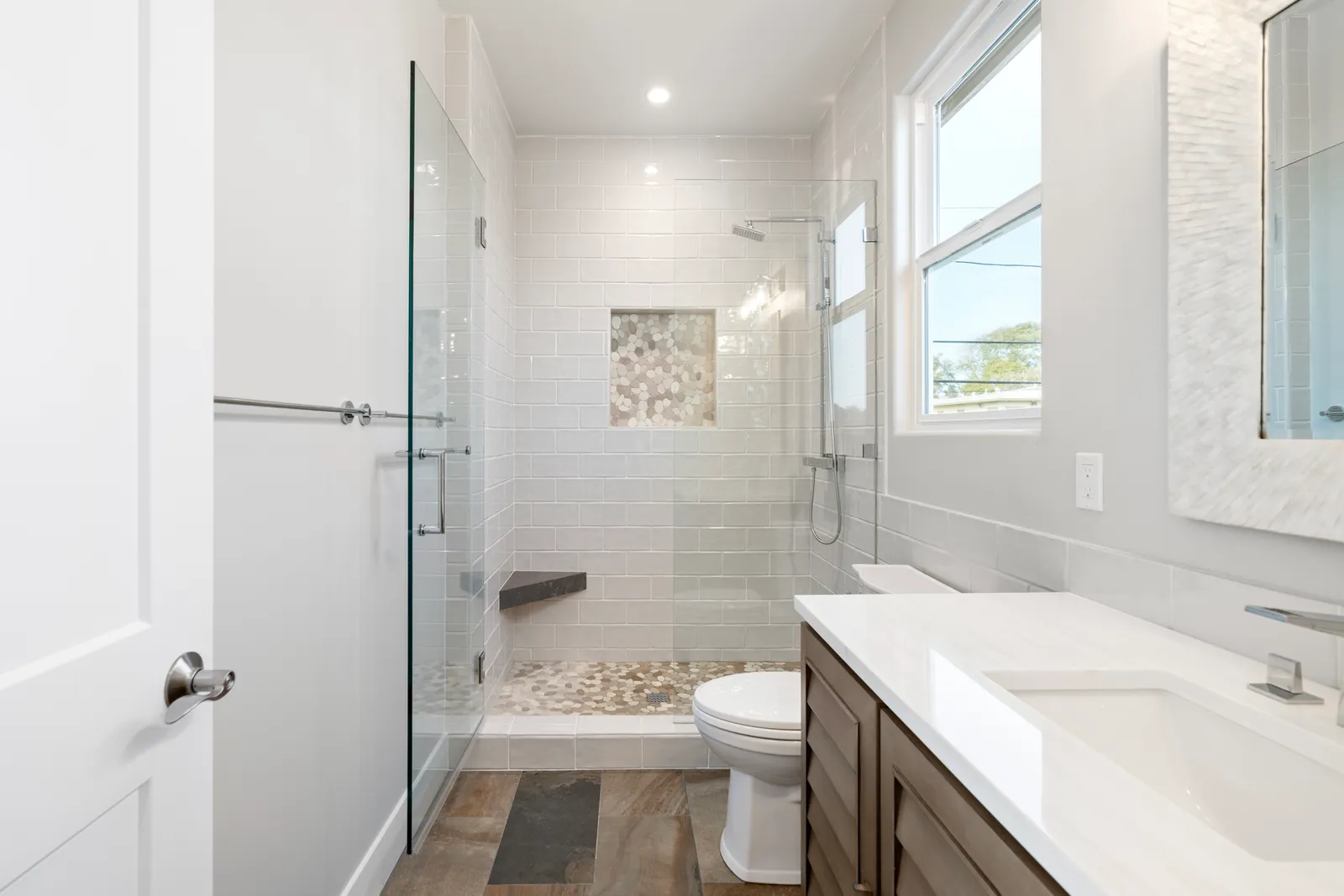
Of all the selections in a bathroom remodel, grout costs the least and gets argued about the most. Homeowners will breeze through a vanity decision, then stall for a week over whether the shower grout should be warm gray or cool gray. And honestly? The agonizing is justified. Grout is a rounding error in the budget, but it decides whether your tile reads as one calm surface or a grid of individual rectangles.
The good news is that grout choices follow a logic. Once you know the three questions to answer, the sample boards stop being intimidating.
Question one: blend or contrast?
Matching grout — a color within a shade or two of the tile — makes the joints disappear. The wall reads as a single surface, the tile shape recedes, and the room feels larger and quieter. It's the right call when the tile itself is the star (a beautiful marble-look porcelain, a handmade-look zellige) or when you want a spa-calm bathroom.
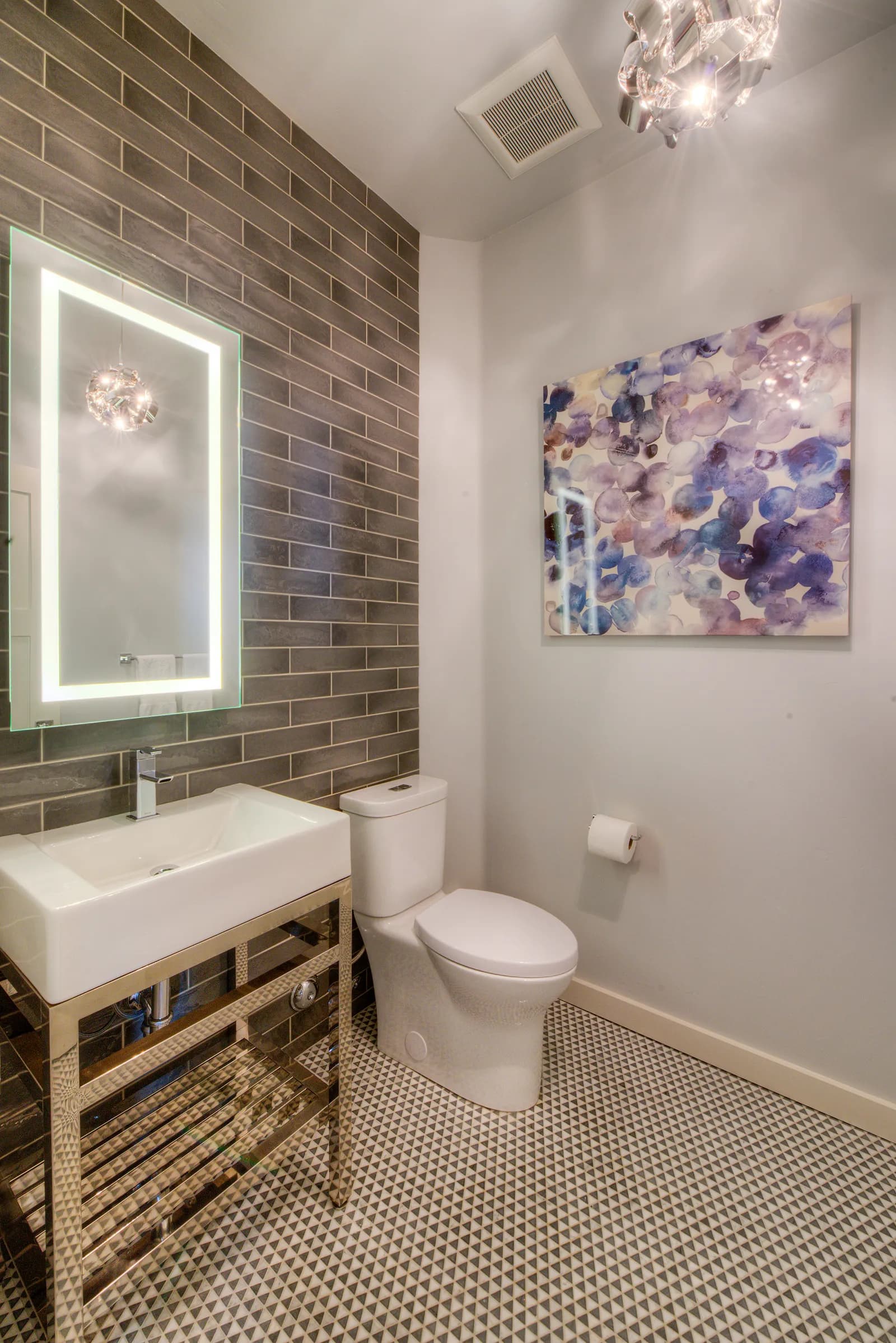
Contrasting grout — dark lines on light tile, or the reverse — turns the layout into graphic pattern. Classic white subway tile with charcoal grout is the familiar example: suddenly you see the running bond, the craftsmanship, the geometry. Contrast celebrates the installation, which also means it exposes it. Every slightly uneven joint is on display, so contrast demands a truly skilled setter.
There's no wrong answer, but there is a wrong reason: choosing contrast just because it photographs well. You'll live with that grid every morning. In a small hall bath or powder room it can be delightful; wrapped around three walls of a primary shower, it can buzz.
Question two: how will it age?
This is where practicality overrules the mood board. Bright white grout on a shower floor is a commitment to cleaning that almost nobody keeps — every mineral deposit and stray hair shows. Very dark grout in a hard-water house can slowly cloud lighter as deposits build. The forgiving middle — warm grays, greiges, soft taupes — hides daily life best, which is why designers reach for them again and again.
Floor grout deserves extra caution. Whatever color you pick, go a shade darker than your instinct. Floors collect life, and grout that starts one step darker looks freshly cleaned years longer. On a pebble or mosaic shower floor, where grout can be a third of the visible surface, the grout color effectively becomes the floor color — a point worth remembering from our look at large-format versus mosaic tile: the smaller the tile, the more the grout matters.
Question three: which grout, not just which color?
Color gets the attention, but the material matters as much:
- Cement grout is the traditional choice — economical, but porous, so it needs sealing and periodic resealing.
- High-performance and epoxy-type grouts resist stains and moisture dramatically better and hold their color. They cost more and are fussier to install, but in showers they earn their keep for decades.
- Caulk, not grout, at every plane change. Where wall meets wall, wall meets floor, and tile meets tub, movement will crack rigid grout. Color-matched flexible sealant belongs there instead.
In our coastal climate, where marine-layer mornings keep bathrooms damp well into June, that moisture resistance isn't a luxury. A shower that never fully dries out between uses is exactly where grout quality shows.
Sample it like you mean it
Never choose grout from a paper chart. Ask for a sample board — your actual tile, set with your actual candidate grouts — and look at it in the bathroom it's destined for, under the vanity lighting you'll actually install, wet and dry. Grout dries lighter than it goes on, and color shifts with the light. Ten minutes with a real sample prevents years of mild regret.
It's a small decision that touches every square foot of tile, which is why we walk clients through it deliberately in every bathroom remodel — same as we do with metal finishes and every other detail that's cheap to choose and expensive to redo.
Sweating a tile decision of your own? Start the conversation or give us a call — we'll bring the sample boards, and you'll only have to grout once.
Design · Build · Integration
Let's build something beautiful.
Call (619) 334-3322 or request your free design-build consultation.