
Choosing Tile Size: Large Format vs. Mosaic
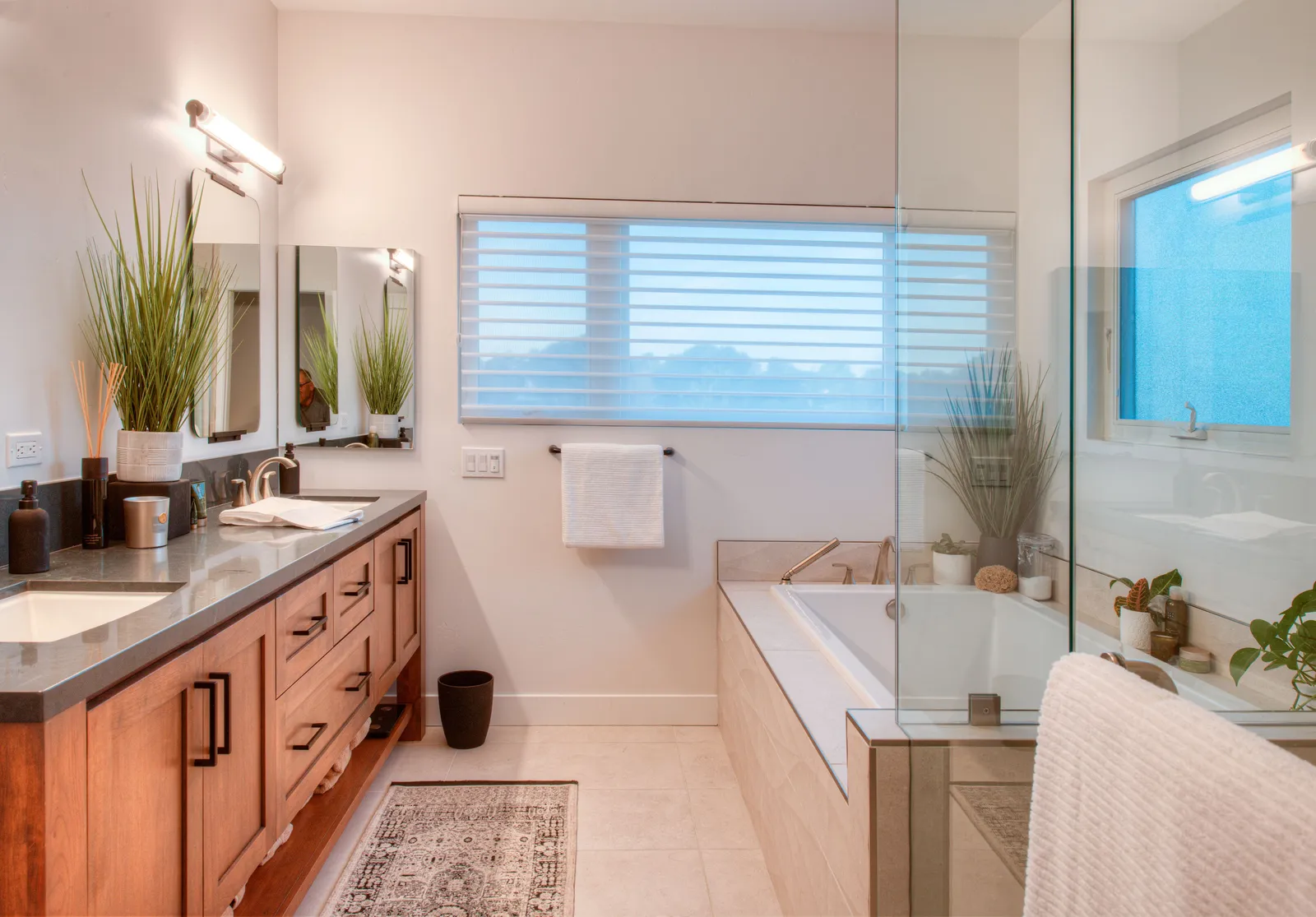
Walk into any tile showroom in San Diego and you'll spend the first twenty minutes thinking about color. Fair enough — color is the fun part. But the decision that will shape how your bathroom feels, how it wears, and how much it costs to install isn't color at all. It's size.
Tile today runs from penny rounds smaller than a coin to slabs the size of a door. Both extremes are beautiful. Both are also easy to use in the wrong place. Here's how we think about scale when we design a bath.
The case for large format
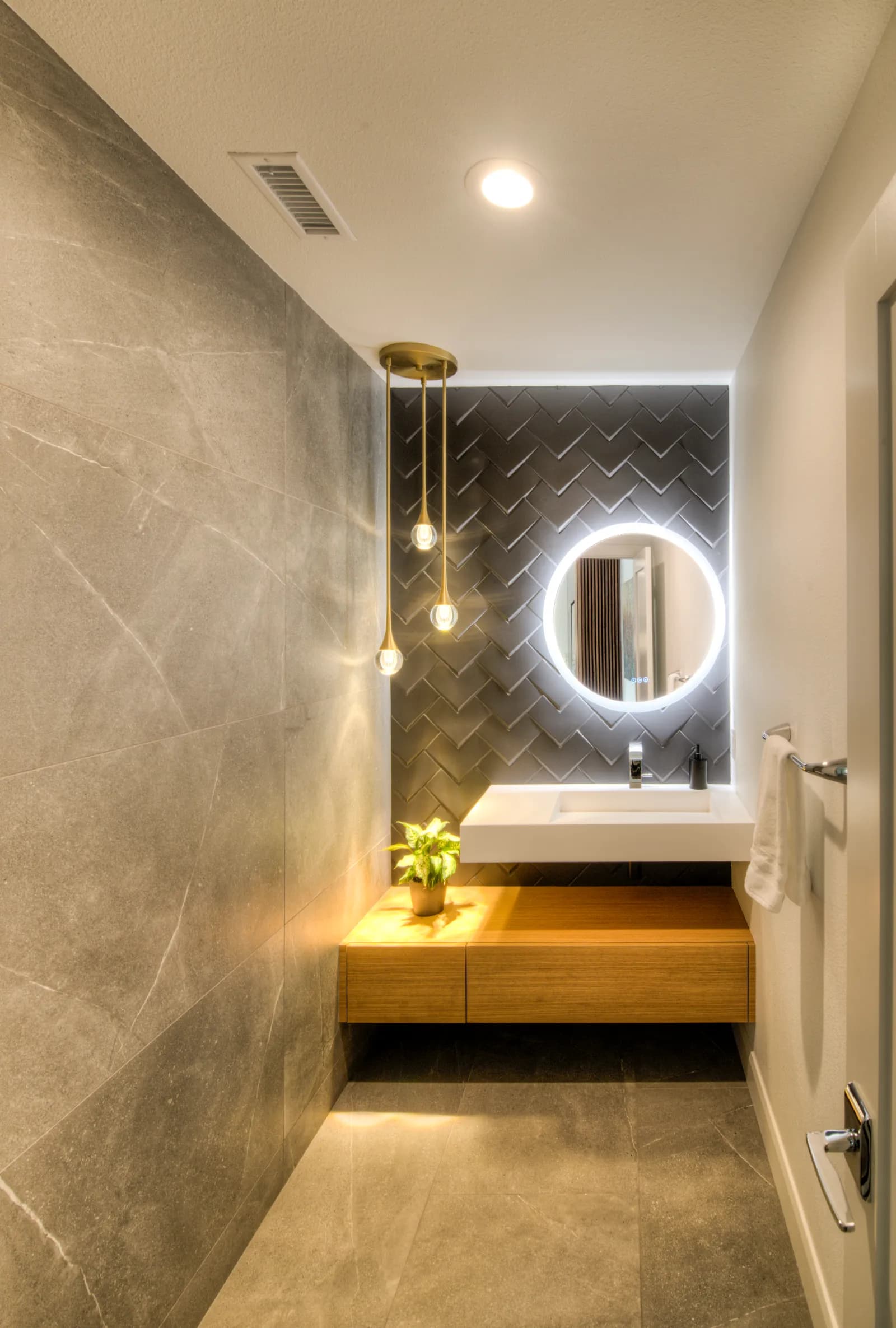
Large-format tile — generally anything with an edge of fifteen inches or more, and often much bigger — has one enormous advantage: fewer grout lines. Fewer lines means a calmer, more continuous surface, which is why large format has become the default for shower walls and bathroom floors in the spa-like bathrooms our clients ask for. A small bathroom, counterintuitively, often benefits most: fewer interruptions make the room read bigger, the same way a single large rug expands a living room.
Large format is also the low-maintenance choice. Grout is the part of a bathroom that ages first, and cutting the amount of it by three-quarters is the single best thing you can do for your future cleaning routine.
The catch is underneath. Big tile telegraphs every imperfection in the wall or floor behind it, so the substrate has to be genuinely flat — and that prep work is where quality shows. Lippage, the little ledges where one tile edge sits proud of its neighbor, is the telltale sign of a rushed job.
Where mosaic earns its keep
Mosaic — anything roughly two inches and under, usually on mesh sheets — isn't just decoration. It solves real problems:
- Shower floors. All those grout joints add slip resistance underfoot, and small tiles conform to the slope a shower pan needs to drain. This is why you'll see a large-format shower wall paired with a mosaic floor in nearly every bath we build.
- Curves and niches. Mosaics wrap curved benches, arched openings, and shampoo niches where big tile simply can't go.
- Moments of character. A herringbone accent wall, a band of handmade-look mosaic behind a vanity — small tile is how a bathroom gets its jewelry.
Grout: the decision hiding inside the decision
Whatever size you choose, grout will make or break it. Three things we walk every client through: joint width (tighter joints look sleeker but demand more precise tile), grout color (matching the tile makes the surface read as one plane; contrasting it turns the pattern itself into the design), and grout type (modern high-performance grouts resist the staining and mildew that plagued the bathrooms most of us grew up with — worth it, especially in a coastal climate where bathrooms stay damp on marine-layer mornings).
Here's a quick showroom trick: ask to see your tile laid out with the actual grout color you're considering, not just the tile alone. A white tile with white grout and the same white tile with charcoal grout are, for all practical purposes, two completely different designs — and the sample board rarely shows you that.
Mixing scales without making noise
The best bathrooms use both sizes, but with a clear hierarchy: one hero, everything else quiet. A dramatic mosaic accent wall wants calm large-format neighbors. A bold veined slab wall wants a simple mosaic floor in a matching tone. When every surface competes, even expensive tile looks busy. It's the same restraint we preach with countertop edges and thicknesses — the details should agree on which one of them is the star.
One more San Diego note: if your project reaches outside — a tiled outdoor shower or patio surface — size rules tighten. Exterior surfaces need texture and slip ratings that indoor showrooms don't always volunteer, so let your builder vet the spec, not just the sample board.
Tile is one of the few finishes you'll touch every single day for decades, and the right scale is what separates a bathroom that photographs well from one that lives well. Planning a bathroom remodel this year? Request a consultation or give us a call — bring your inspiration photos, and we'll help you translate them into tile that fits your actual room.
Design · Build · Integration
Let's build something beautiful.
Call (619) 334-3322 or request your free design-build consultation.