
Custom vs. Semi-Custom vs. Stock Cabinets
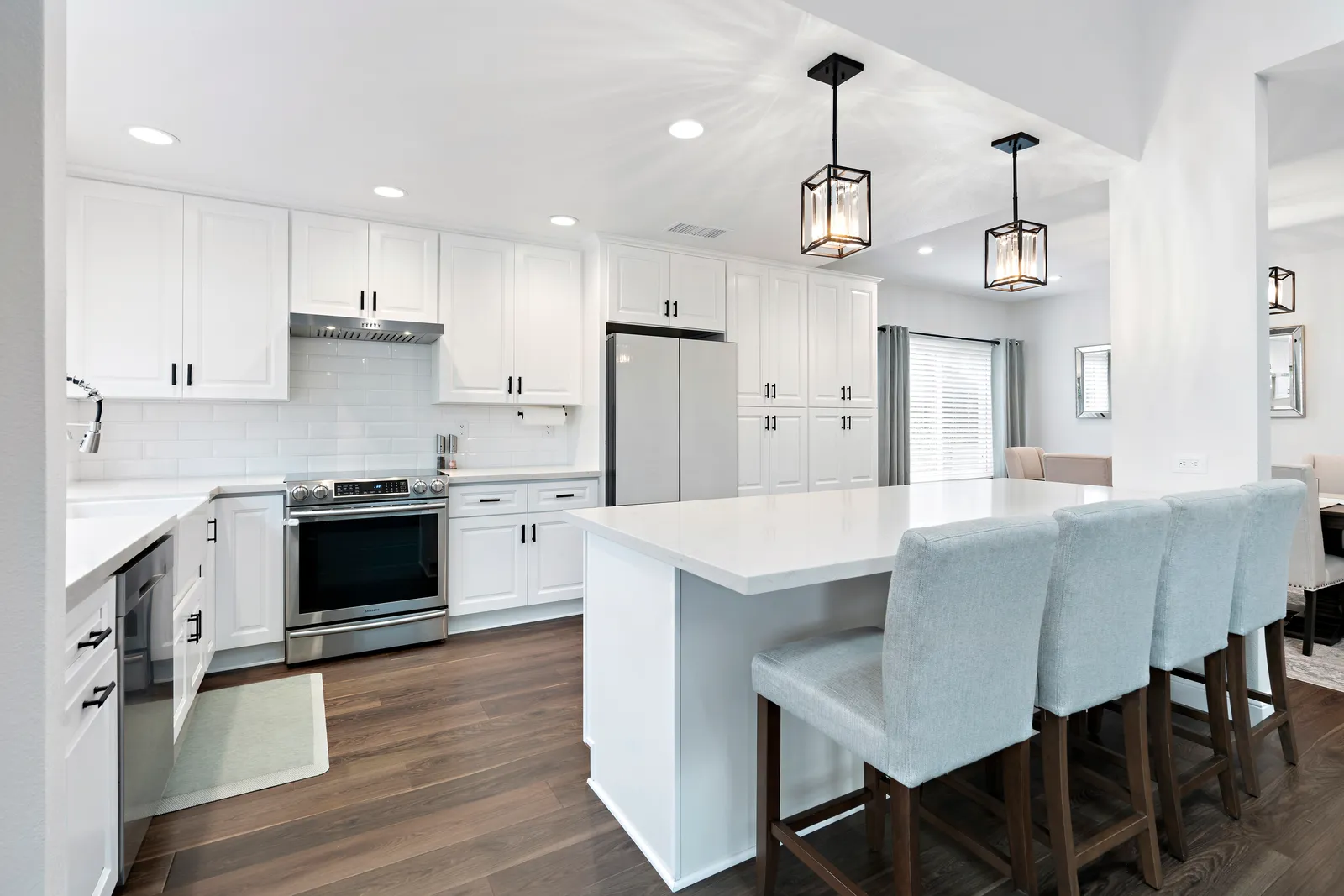
Cabinets are usually the single biggest line item in a kitchen remodel, and the industry describes them with three words that sound simple: stock, semi-custom, and custom. Then you start shopping and discover the words mean different things depending on who's saying them.
Here's a plain-language version of what each tier actually is, what it buys you, and — the part most homeowners don't hear — why the best answer is often a mix.
Stock: fixed sizes, fast delivery
Stock cabinets come in predetermined sizes, typically in three-inch width increments, in a limited set of door styles and finishes. You choose from what exists; nothing is built for your kitchen specifically. The trade-offs are real — filler strips to bridge the gaps between fixed sizes, fewer interior organizing options, thinner boxes at the budget end — but so are the advantages: short lead times and the lowest cost per linear foot. For a straightforward layout, a rental property, or an ADU kitchen, well-chosen stock cabinetry is often exactly right.
Semi-custom: the sweet spot for most remodels
Semi-custom starts from a manufacturer's standard line but lets you modify it — adjust widths and depths in smaller increments, extend cabinets to the ceiling, choose from a much wider range of door styles, finishes, and interior fittings. This is where most of our kitchen projects land, because it delivers a fitted, built-for-this-house look without pricing the whole tier of full custom. If you're picturing a classic Shaker kitchen — and there's a reason that style never dies — semi-custom lines execute it beautifully.
Custom: built for your walls, not a catalog
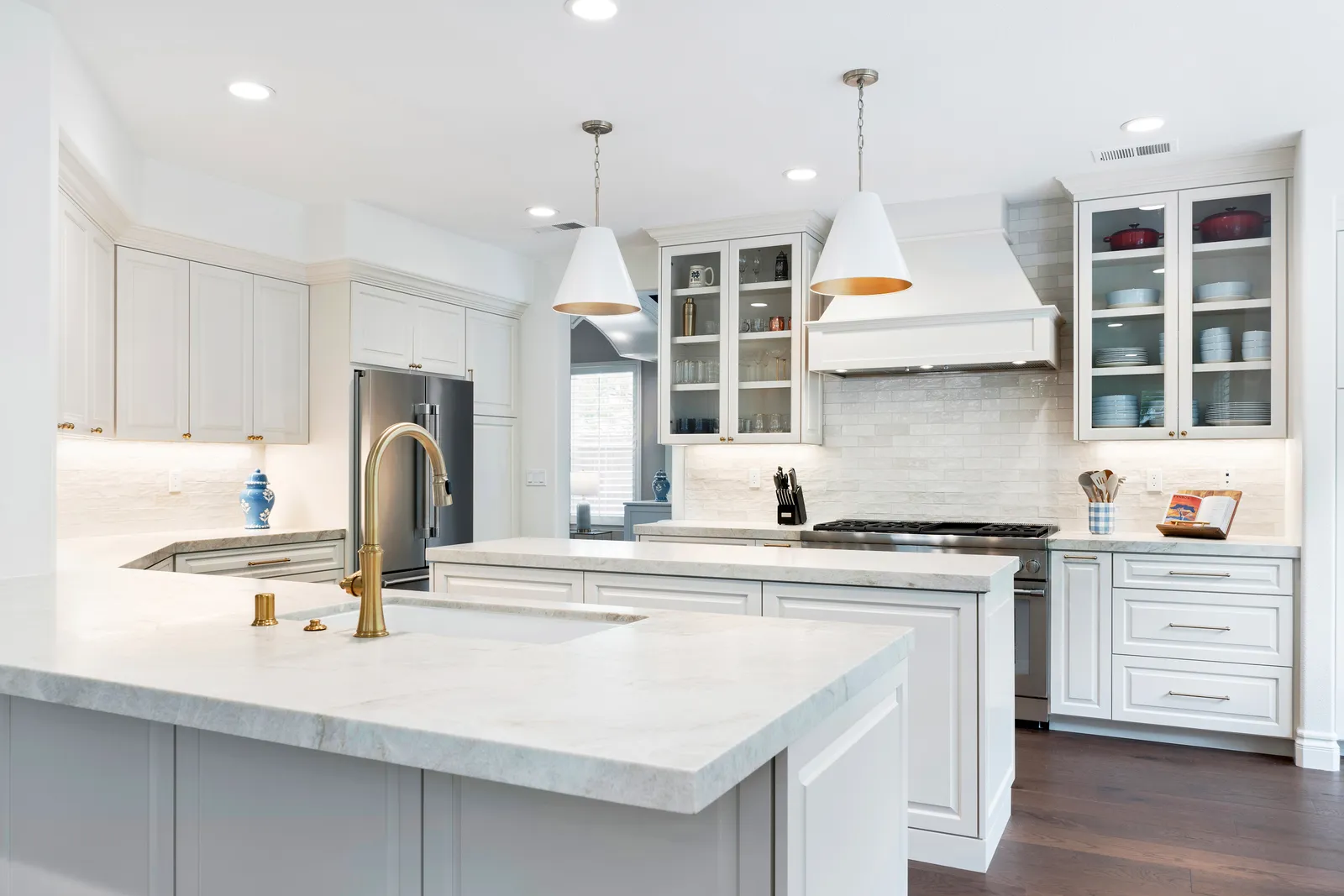
Custom cabinetry is built from scratch to your kitchen's exact dimensions and your designer's exact drawings. Nothing is off the shelf, which means nothing is off the table: a curved island end, a paneled appliance wall that reads as furniture, a pantry engineered around your actual groceries. It's the right call when the kitchen is architecturally unusual — common in San Diego's older Spanish revivals, where walls are rarely square and openings rarely standard — or when the design itself is the point. You pay for it in both cost and lead time, and it's worth budgeting patience along with money.
The honest answer: most great kitchens mix tiers
Here's what the showrooms rarely say out loud. A kitchen doesn't have to be all one thing. We regularly design projects where the island and a statement hutch are custom, the perimeter runs are semi-custom, and the adjacent laundry room is stock — because guests will run their hands along the island, and nobody will ever admire the cabinet over the washing machine.
A few questions that sort it quickly:
- Is your layout standard or quirky? Square rooms tolerate stock; old bones usually don't.
- How long will you own the home? The longer your horizon, the more sense custom makes.
- Where do eyes and hands land? Spend there; save elsewhere.
- What's your real deadline? Lead times vary widely by tier, and they drive your whole schedule.
The tier decision is also where a detailed proposal earns its keep — "cabinets: allowance" on an estimate tells you nothing, while a line-by-line spec tells you exactly what you're buying and why.
If you're weighing cabinet options for a kitchen project, this is precisely the kind of decision we help homeowners make every week. Request a consultation or give us a call — tell us what you're planning, and we'll help you put the money where you'll feel it.
Design · Build · Integration
Let's build something beautiful.
Call (619) 334-3322 or request your free design-build consultation.