
Counter-Depth vs. Standard Fridges in a Tight Kitchen
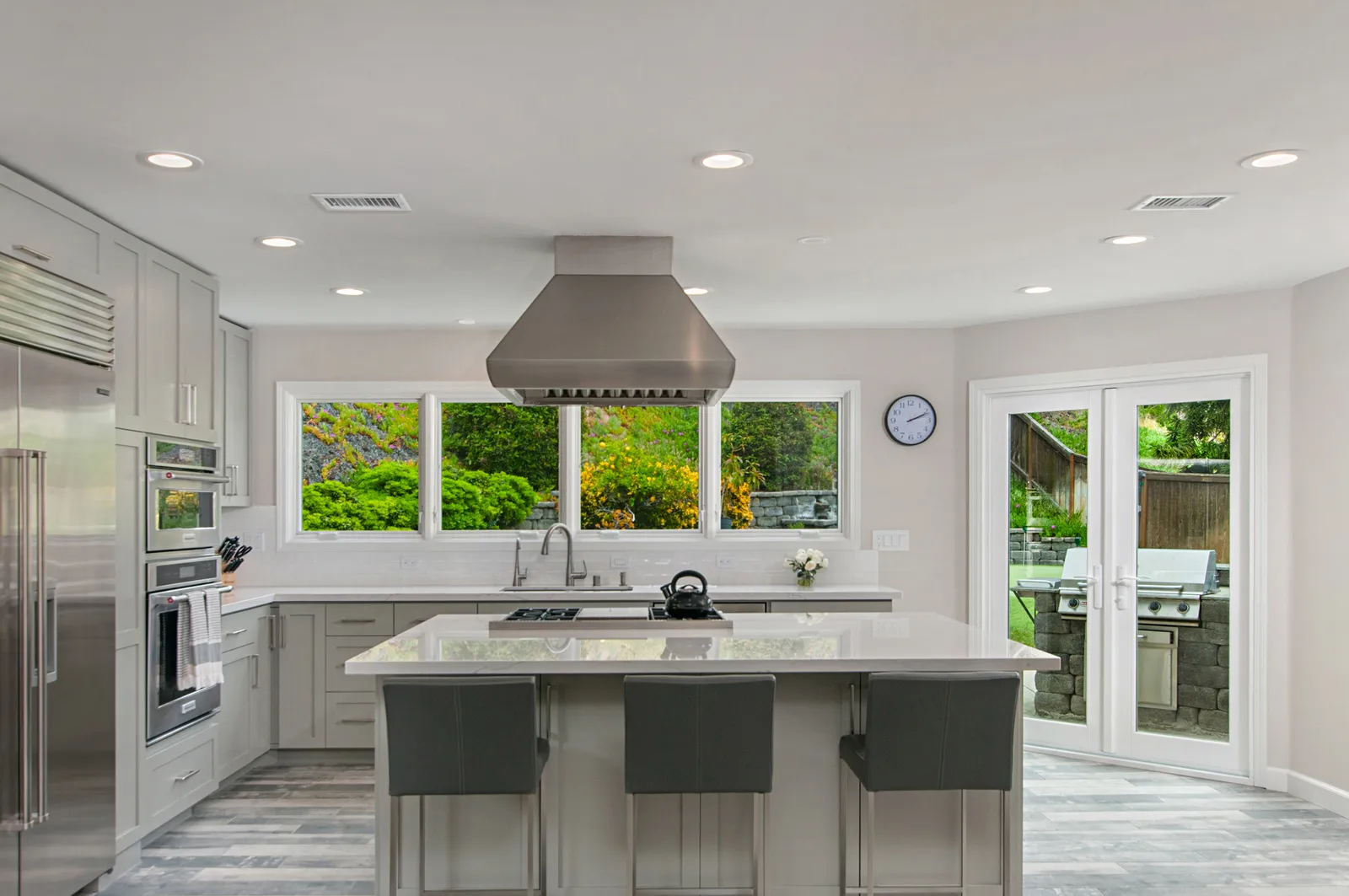
Stand in the doorway of almost any unrenovated kitchen in a Clairemont or Allied Gardens ranch and you'll see it: a refrigerator shouldering six inches past the cabinets, pinching the walkway and blocking the view into the room. It's the single bulkiest object in the house, and in a tight kitchen it sets the tone for everything around it.
So when homeowners ask us whether a counter-depth fridge is worth it, the honest answer is: it depends on what your kitchen is short on — inches or groceries.
What counter-depth actually buys you
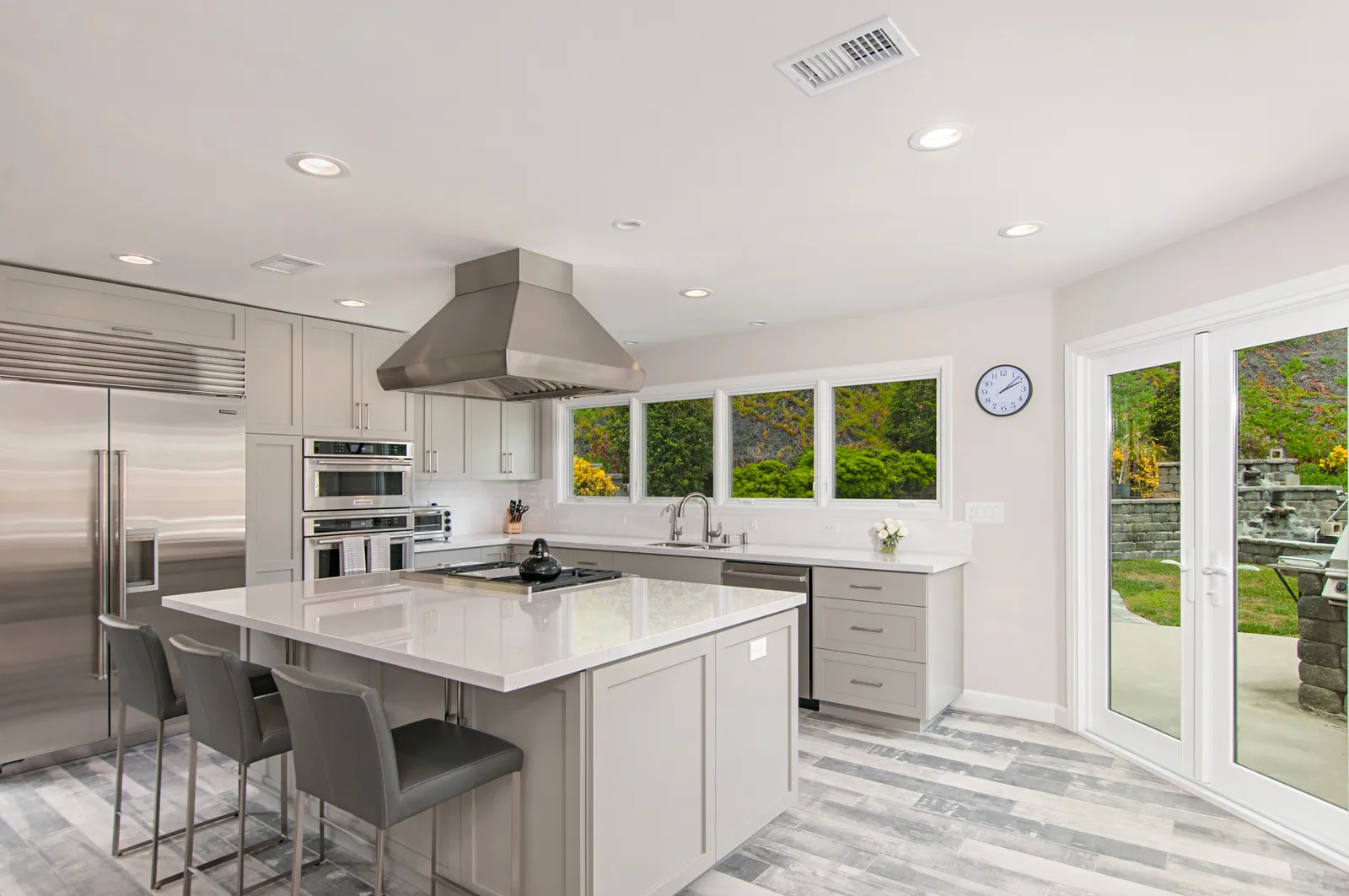
A standard refrigerator is deep enough that its box protrudes well beyond a typical 24-inch base cabinet. A counter-depth model tucks its box roughly flush with the counters, leaving only the doors proud. That flush line does three things at once: it widens the walkway where you need it most, it cleans up the sight line from the adjacent room, and it makes even modest stock cabinets read as more custom. In a galley kitchen or a one-cook corridor, those reclaimed inches are the difference between squeezing past someone and simply walking past them.
What you give up
There's no free lunch: counter-depth means less interior volume, and the difference shows up exactly where holiday hosts feel it — wide platters, sheet-pan leftovers, the week's produce for a family of five. Households that shop once a week for a crowd, or that entertain often, sometimes regret the trade. The common fixes are a slightly wider counter-depth unit, a second small fridge in the garage or pantry, or a beverage fridge at the island that offloads drinks entirely.
When a standard fridge still wins
If your kitchen has a generous footprint — or you're planning a kitchen remodel that recesses the fridge into its own alcove — the standard box stops being a problem. Building the wall cavity a few inches deeper, or borrowing dead space from an adjacent closet, lets a full-depth fridge sit flush without sacrificing a single cubic foot. In our experience that's the best of both worlds, and it's a trick worth asking about before you assume you're stuck choosing.
The real question is the layout
Here's the thing the appliance showroom won't tell you: if the fridge placement is wrong, no depth will save it. A fridge that opens into the main walkway, or sits at the far end of the work zone, creates traffic jams no matter how flush it sits. We wrote about why a kitchen layout ages well when the big pieces are positioned for how you actually move — and the refrigerator is the biggest piece there is. Clear landing counter beside it, door swing away from traffic, and a straight shot from the garage with grocery bags: get those right first, then pick your depth.
If your kitchen is fighting you every time two people are in it, the fridge is probably a symptom, not the disease. Request a consultation or give us a call — we'll help you figure out whether you need a new refrigerator or a better floor plan.
Design · Build · Integration
Let's build something beautiful.
Call (619) 334-3322 or request your free design-build consultation.