
Screened Rooms and Bug-Free Evenings
For decades, San Diego didn't do screened porches. That was a Southern thing, a Midwest thing — a defense against humidity and bug seasons we simply didn't have. Our climate let us leave the patio wide open and eat dinner outside eight months a year without a second thought.
Then the ankle-biting mosquitoes arrived. If you've hosted a backyard dinner in the last few summers anywhere from La Mesa to Encinitas, you know exactly the species we mean — the tiny, daytime-active ones that ignore citronella and end the party by dessert. Suddenly the screened room, that transplant from other climates, is one of the most-requested features in our outdoor living conversations. January, while the yard is quiet and the rainy season keeps you indoors anyway, is exactly the right time to plan one for summer.
What a screened room actually is
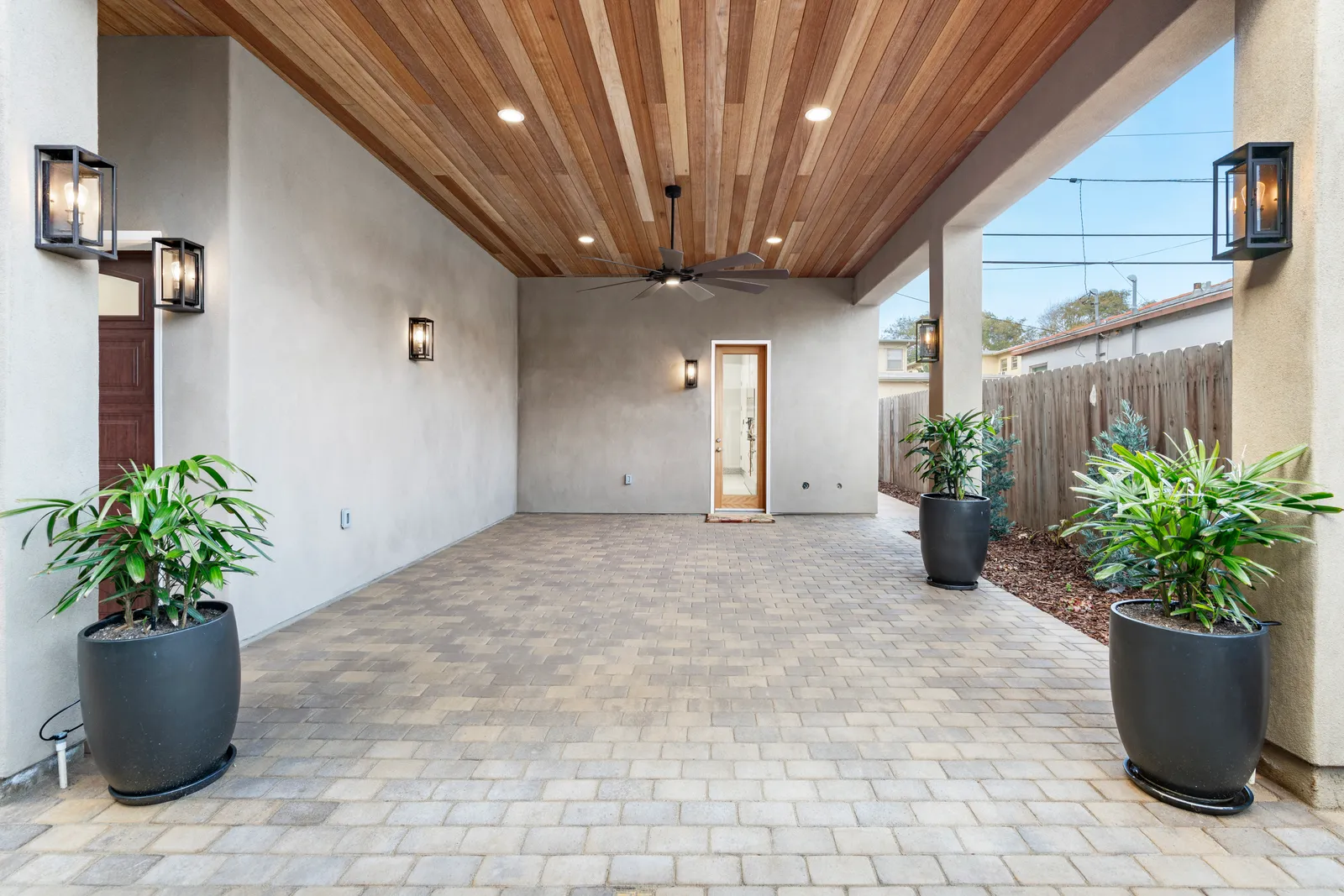
At its simplest, it's a covered patio with fine-mesh screening between the posts — a room that keeps the breeze and the view but excludes the bugs, the skimmer-clogging leaves, and the neighbor's cat. Done well, it doesn't read as an afterthought bolted to the house. The roof structure matches the main roofline, the floor flows at the same level as the interior, and a tongue-and-groove ceiling with a fan makes it feel like a genuine room that happens to breathe.

Design decisions that matter more than they seem
A few choices separate the screened rooms people live in from the ones that become storage:
- Screen selection. Finer mesh stops the small invasive mosquitoes; darker screen is dramatically easier to see through. There are also pet-resistant panels for the lower sections where dogs lean.
- Orientation. A west-facing screened room needs shade strategy; a north-facing one near the coast should account for the marine layer's damp chill in early summer.
- Power and light. Ceiling fans keep air moving on still evenings, and layered, dimmable lighting is what makes the room usable after sunset — which is the whole point.
- The floor. Pavers and porcelain handle the indoor-outdoor life; anything that minds moisture doesn't belong here.
Screened, covered, or fully enclosed?
Screening is the middle option on a spectrum. An open covered patio costs the least and suits homeowners who mostly use the yard in daylight. At the other end, a fully enclosed sunroom or a true room addition gives you conditioned square footage that counts as living space — with the permits, insulation, and cost that come with it. The screened room splits the difference: more usable hours than open air, far less complexity than an enclosure. Many families find it's the version they actually use, because it stays connected to the yard, the pool, and the smell of the jasmine.
One planning note: roofed structures attached to the house need permits and thoughtful structural tie-ins, and jurisdictions across the county treat them differently. This isn't a weekend kit project if you want it to look and last like part of the house.
Built for the evenings you moved here for
The whole reason to live in San Diego is that hour after dinner when the heat lets go and the sky does its thing. A well-built screened room gives that hour back — no swatting, no retreating inside at dusk. If you want one ready before the long evenings of June, the design conversation should start now. Request a consultation or give us a call — tell us how you want your evenings to go, and we'll build the room that makes it happen.
Design · Build · Integration
Let's build something beautiful.
Call (619) 334-3322 or request your free design-build consultation.