
Drainage, Gutters, and Grading: Winter Homework for Homeowners

San Diego gets maybe ten inches of rain in a good year, and most of it arrives between now and March. That short season is exactly why drainage problems here go unnoticed for so long: a slow leak or a soggy corner of the yard shows up for a few weeks, dries out by April, and gets forgotten until the next December storm asks the same question all over again.
This year, with so many of us home more than usual, you have a rare advantage — you're actually there to watch what the rain does. Consider this your winter homework.
Watch where the water goes
The next time it rains, put on a jacket and walk the perimeter of your house while it's still coming down. You're looking for three things. First, water sheeting over the edge of the gutter instead of running through it — that usually means a clog or a gutter pitched the wrong way. Second, downspouts that dump water right at the foundation instead of carrying it away. Third, puddles that form against the house and sit there after the rain stops.
None of these look dramatic. All of them matter, because stucco, slab foundations, and the raised floors under many of our older Spanish revivals and midcentury ranches all handle occasional moisture fine — and repeated, concentrated moisture badly.
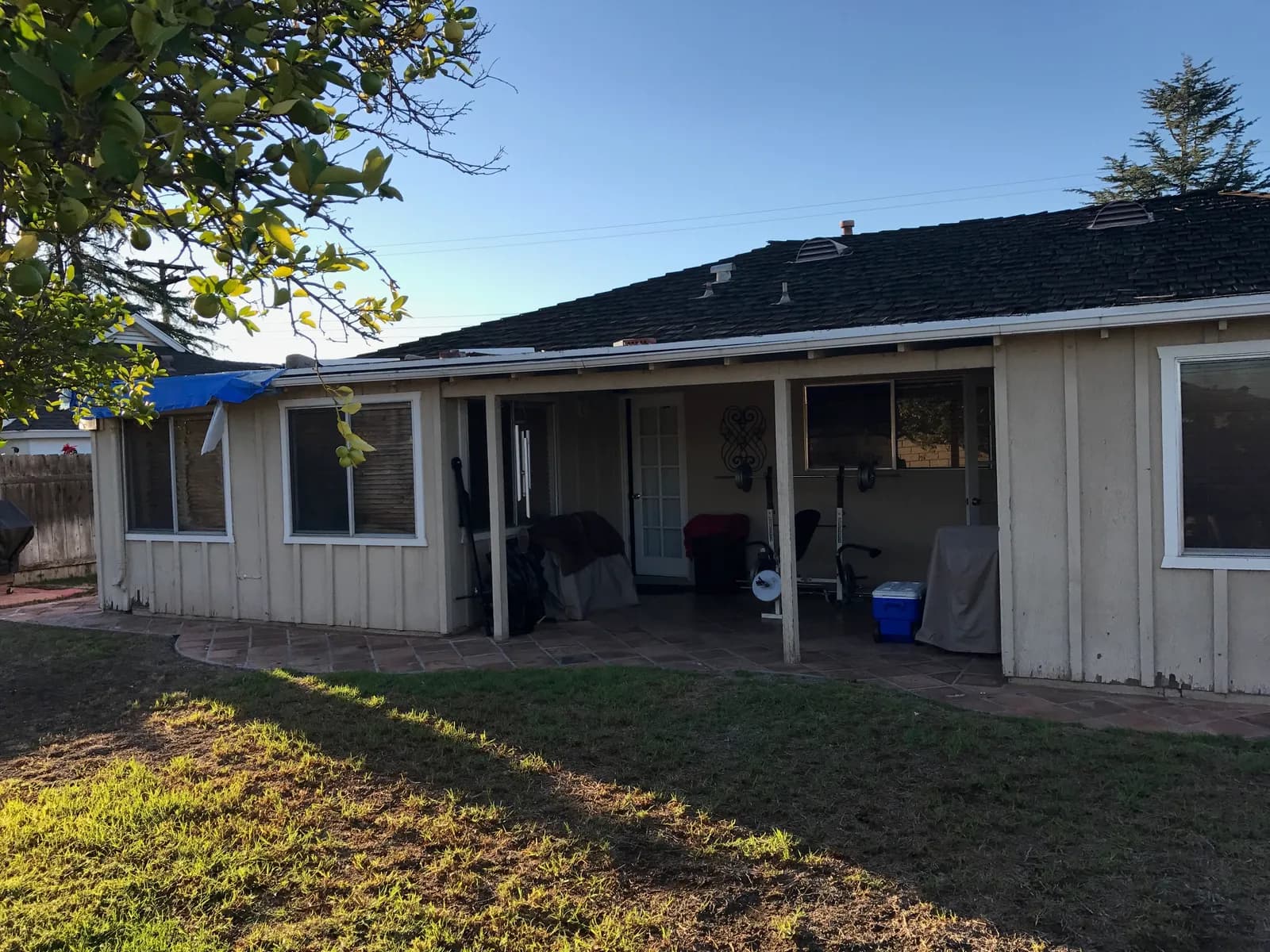
Gutters and downspouts: small parts, big consequences
Gutters fail quietly. Fasteners loosen, seams open, and debris from October's Santa Ana winds settles in and stays. A gutter that overflows at one corner will drop hundreds of gallons in the same spot over a season, and that's how you get stained stucco, rotted fascia, and eroded planting beds.
The fixes are usually modest: cleaning, re-pitching, adding a downspout where a long run carries too much water, and extending discharge points so water lands several feet from the foundation. If you had ladders out for holiday lighting last month, you've already seen the condition of your eaves up close — this is the companion chore.
Grading: the problem nobody can see
Grading is simply the slope of the ground around your house, and the rule is that it should fall away from the foundation. On older San Diego lots, decades of landscaping, added patios, and settled soil often reverse that slope without anyone noticing. Hardscape poured flat against the house is a frequent offender.
Signs worth noting during a storm:
- Water pooling against the foundation or garage slab
- A musty smell in rooms along one exterior wall
- Efflorescence — white mineral staining — on concrete or stucco near grade
- Mulch or soil splashing high onto the wall
Correcting grade can be as simple as reshaping a planting bed or as involved as adding area drains and a proper collection system. Either way, it's the kind of thing best addressed before it becomes a foundation or framing conversation. When we take on an outdoor living project, drainage planning is baked in from the first site walk — water management is the unglamorous half of every beautiful backyard.
Turn your notes into a plan
Keep a running list on your phone this winter: where water overflowed, where it pooled, which wall smelled damp. By February you'll have a complete picture of how your property handles rain — the exact information a designer or builder needs, and the same discipline we covered for the house itself in our post on flashing, sealants, and fall tune-ups.
Most of what you find will be maintenance. Some of it may point to something bigger — a patio that needs regrading, a yard that needs real drainage, an exterior that's due for a rethink. If your list is growing, request a consultation or give us a call — we'll help you sort the quick fixes from the projects worth planning properly.
Design · Build · Integration
Let's build something beautiful.
Call (619) 334-3322 or request your free design-build consultation.