
Choosing Kitchen Flooring That Survives Real Life
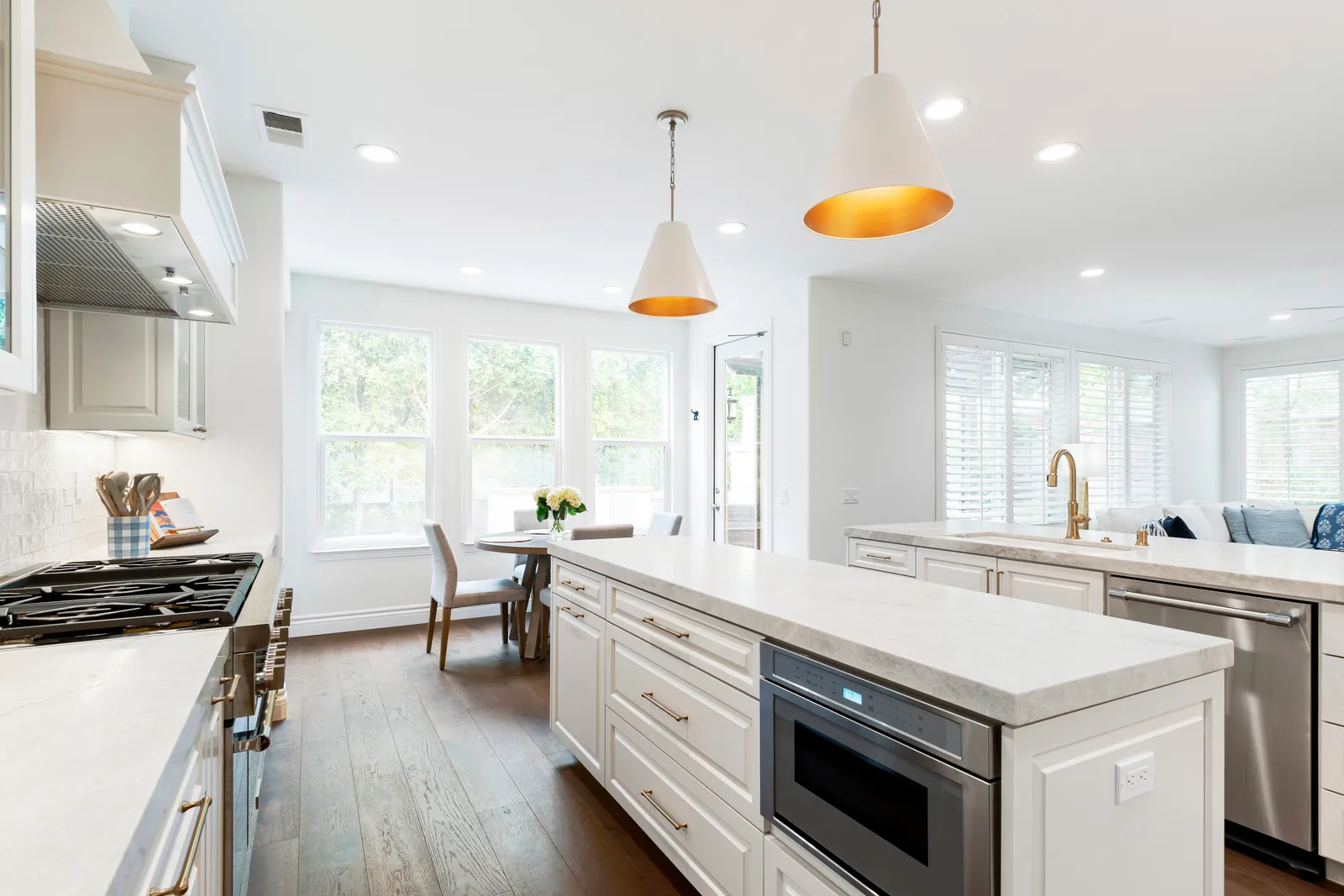
Flooring showrooms are a strange kind of theater. Every sample looks flawless under gallery lighting, untouched by a single dropped pan or wet paw. But your kitchen floor won't live in a showroom. It will live under a family — dropped cast iron, spilled olive oil, chair legs dragged back from the island a thousand times, and in San Diego, a steady tide of beach sand and garden grit tracked in through the patio door.
So before you fall for a finish, get honest about the abuse your floor will take. The best kitchen flooring choice isn't the prettiest sample; it's the material whose weaknesses you can genuinely live with.
Start with your household, not the material
Every flooring decision we guide starts with the same handful of questions:
- Who walks here? Kids, dogs, cleats, high heels — each is its own wear pattern.
- How do you cook? Daily heavy cooking means grease, water, and dropped things. Occasional cooking is a gentler life.
- What does the floor connect to? In open plans, the kitchen floor is usually the great-room floor too, so it has to work as living space, not just work space.
- How close is the outdoors? A kitchen that opens to a yard or pool deck sees sand, water, and sunscreen that an interior kitchen never will.
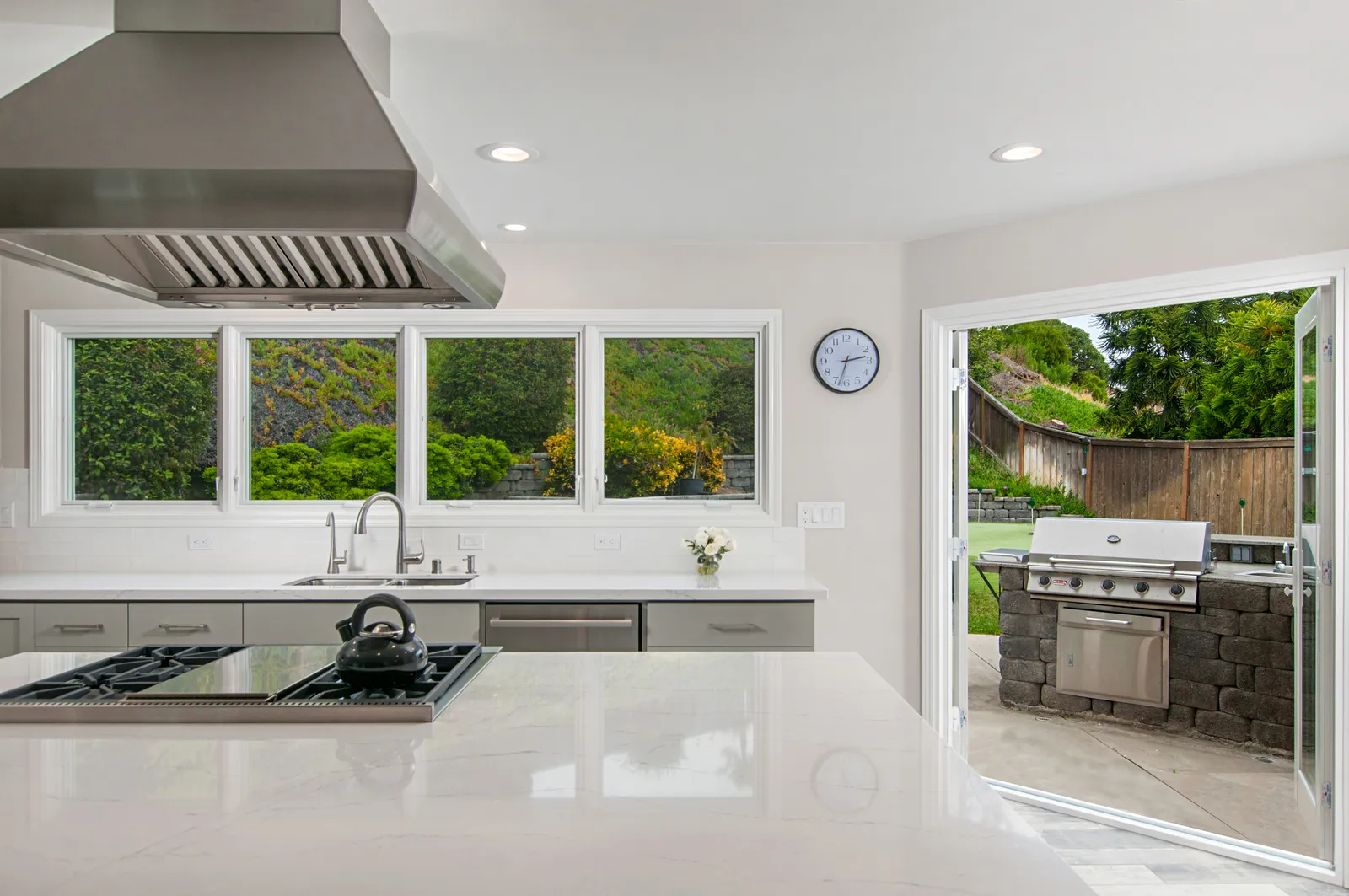
That last one matters more here than almost anywhere. San Diego kitchens increasingly open straight to outdoor rooms, and the flooring has to handle the traffic — and sometimes visually continue — across that threshold.
The main contenders, honestly
Porcelain tile is the durability champion: nearly waterproof, scratch-proof for practical purposes, and available in convincing wood and stone looks. Its weaknesses are the ones you feel — it's hard underfoot and unforgiving to dropped glassware — though larger formats and good underlayment help. For a kitchen that flows to an outdoor living space, porcelain's ability to run inside and out in rated versions is hard to beat.
Engineered hardwood gives you real wood warmth with far better dimensional stability than solid planks — a genuine advantage in coastal neighborhoods where the marine layer swings humidity daily. It scratches and dents like wood because it is wood; households that consider that character rather than damage tend to be happiest with it.
Luxury vinyl plank has earned its popularity: waterproof, resilient underfoot, quiet, and tough. Quality varies enormously across the category, and the low end telegraphs itself. In the right rooms — and in rental properties, where durability beats drama — the better product lines are a thoroughly defensible choice.
Natural stone is beautiful and permanent-feeling, but most varieties need sealing and will etch or stain if neglected. Like choosing between quartz, granite, and marble counters, it's a decision about how much stewardship you're signing up for.
The unglamorous details that decide the outcome
Whatever material you choose, three quiet decisions matter as much as the material itself. First, the subfloor: much of San Diego's older housing stock sits on slabs that have moved a little over the decades, and flatness prep is what separates a floor that lasts from one that clicks and gaps. Second, transitions: in an open plan, where the kitchen flooring stops — or whether it stops at all — shapes how big the whole space feels. Third, grout and finish choices: a mid-tone grout on a textured tile hides a week of real life; bright white grout on a smooth floor confesses everything.
Match the floor to the decade, not the trend
A kitchen floor should outlast at least one wave of fashion. Neutral tones, forgiving texture, and honest materials age well; whatever is hyper-current this year will date the room fastest. If you're unsure, let the cabinets and lighting carry the personality and let the floor be the calm underneath it.
Choosing flooring is easier with someone who has seen a decade of choices age in real houses. Request a consultation or give us a call — we'll help you pick a floor you'll still be glad about ten sandy summers from now.
Design · Build · Integration
Let's build something beautiful.
Call (619) 334-3322 or request your free design-build consultation.